

Digital Product Passport for Footwear: Traceability, Materials and Lifecycle

Footwear is one of the most complex categories in the fashion sector. A single pair of shoes can include natural materials, technical textiles, synthetic components, adhesives, stitching, surface treatments and structural parts with different functions, and every element contributes to the quality, durability, performance and overall impact of the product.
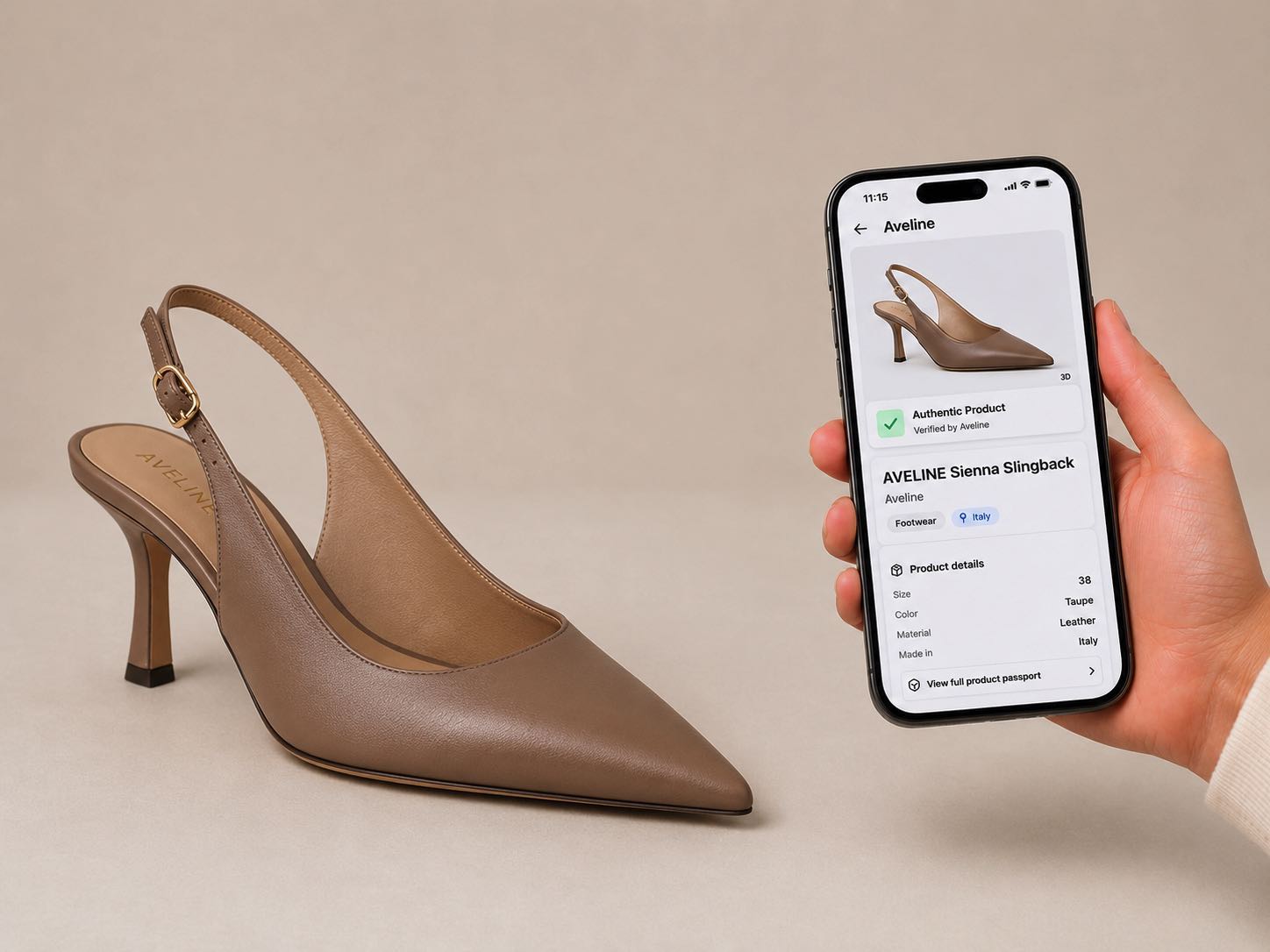
For this reason, in the world of footwear, the Digital Product Passport should not be seen as a simple digital page linked to a QR code, but as a tool to bring order to a complexity that already exists. It is not just about making some information accessible to the end customer: it is about building a structure capable of accompanying the product throughout its entire lifecycle, from production to purchase, from use to maintenance, all the way to repair, resale or end of life.
Why footwear requires a different approach
A shoe is not made of a single main material. Even in the most essential models, the structure of the product comes from the integration of several elements: upper, lining, sole, midsole, insole, laces, eyelets, reinforcements, stitching, adhesives and finishes.
The upper can be made of leather, technical fabric, synthetic material or a combination of components. The lining can have different characteristics from the exterior. The sole may include rubber, EVA, TPU or other materials. The insole can be removable or integrated. Surface treatments can affect resistance, water resistance, appearance and maintenance.
This makes traceability more articulated than for other fashion products. To truly tell the story of a shoe, indicating the main material is not enough: you need a more complete view of the product's composition, its components, the origin of the manufacturing steps and the information that is useful to manage it after purchase. The Digital Product Passport can help precisely with this, turning a set of technical data, often scattered across product sheets, suppliers, certifications and internal documents, into a more orderly, accessible system connected to the individual product.
The problem is not just showing information
Many brands already have a large amount of data about their products. The problem is that this data is not always structured in a way that makes it easy to use: some information lives in technical sheets, some comes from suppliers, some is tied to production, materials, certifications, packaging or internal management systems. When this information stays separate, it becomes harder to make it available to the customer, to use it for compliance, or to leverage it in the post-purchase relationship.
An effective Digital Product Passport should not limit itself to showing content: it should organise data in a coherent, updatable and understandable way, creating a bridge between what the brand knows about the product and what the customer, the retailer or a supply chain operator can actually consult. For footwear, this structure is particularly important because the product is made of many parts, each with different characteristics, origins and implications.
Packaging, product or label: the carrier depends on the use case
In footwear, the Digital Product Passport does not necessarily have to start from a physical integration inside the shoe. For many collections, the first access point can be a QR code on the packaging: a simple solution to implement, compatible with existing production processes and suited to brands that want to start structuring their DPP without intervening directly on the product.
In other cases, the passport can be linked to a label, a hangtag or a dedicated tag. For premium lines, limited editions or products more exposed to counterfeiting and resale, on the other hand, it can make sense to integrate an NFC tag directly into the footwear, for example in the tongue, the insole, the lining or an internal patch.
The choice of carrier is not just a technical one: it depends on the value of the product, the expected lifecycle, the level of security required and the type of experience the brand wants to offer after purchase.
A QR code on the packaging can be ideal for making product information, materials, care and compliance accessible, while an NFC integration can offer a stronger link between digital identity and physical product, especially when authenticity, ownership and the secondary market become relevant elements. The point is not to choose one technology that works for every case, but to build a flexible system, capable of adapting to the type of footwear, the price range and the brand's objectives.
QR on the packaging or NFC in the product are not conflicting alternatives: they are different layers of the same system. Comparing the two carriers helps choose the right starting point for each collection. Read the NFC vs QR code comparison →
What a DPP for footwear should contain
A Digital Product Passport for footwear should go beyond the basic information normally available on a label or a product page. It should collect and organise the data that makes it possible to better understand how the product is made, where its components come from, how to care for it and what can happen after use.
| Area | Examples of information |
|---|---|
| Product identity | model, SKU, colour variant, size, season, batch |
| Components | upper, lining, sole, midsole, insole, laces, eyelets |
| Materials | leather, textiles, rubber, EVA, TPU, recycled or certified materials |
| Production | country of production, assembly, relevant manufacturing steps, key suppliers |
| Care | cleaning, drying, storage, recommended products |
| Repair | replaceable parts, resoling, authorised services, available spare parts |
| Lifecycle | take-back, resale, recycling, disposal, second life |
| Compliance | data required by regulations, standards and traceability requirements |
This information does not necessarily have to be shown all in the same way or to the same audience. Part of it can be designed for the end customer, part for the brand, part for retailers, partners, supply chain operators or future compliance requirements: the value of the DPP lies precisely in the ability to structure different levels of information around the same product.
From technical data to customer value
In the world of footwear, a lot of technical information can become concrete value for the buyer. Knowing which materials make up a shoe can help the customer better understand its quality, use and maintenance; knowing how to clean it, how to store it or which products to avoid can extend its life; knowing whether some parts are replaceable can make a repair easier, and knowing whether take-back or resale programmes exist can give continuity to the product even after the first use cycle.
The Digital Product Passport can therefore turn data that is often hidden or underused into a useful part of the post-purchase experience. This is particularly important for a category like footwear, where the product is used, worn and put to the test over time: unlike other fashion items, a shoe has a very direct relationship with daily use, wear, comfort, maintenance and durability. A well-built DPP can help the brand stay present even after the sale, offering content and services connected to the real product.
Durability, care and repair
The lifespan of a shoe does not depend only on the initial quality of the product. It also depends on how it is used, cleaned, stored and repaired over time: two similar products can have very different lives depending on the conditions of use and the information available to the customer.
For this reason, the Digital Product Passport can also become a maintenance guide. Through the DPP, the brand can provide specific instructions for cleaning materials, drying suggestions, guidance on products to avoid, storage tips, information on replacing laces or insoles, authorised repair services and resoling options.
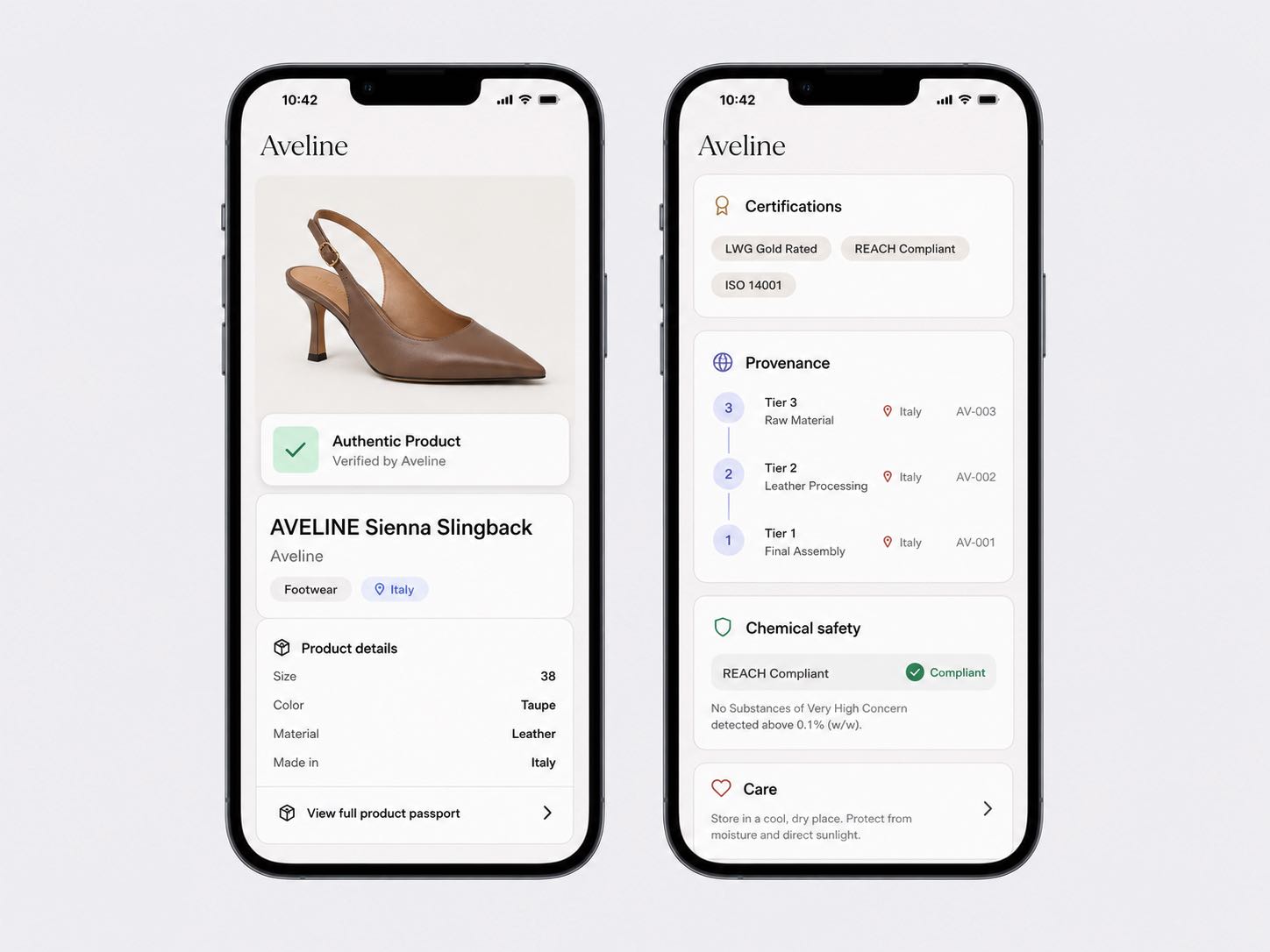
This kind of content is not only useful for the customer: it can help reduce returns, misuse, premature deterioration and loss of product value. For brands working on quality, sustainability and durability, the DPP can become a concrete tool to show that responsibility does not end at the moment of sale.
End of life and circularity
Footwear is a complex category even when it reaches the end of its use cycle. Many shoes are made of different materials, often glued or layered together, and this makes it harder to separate the components, identify the materials and define the best path between repair, reuse, collection, recycling or disposal.
The Digital Product Passport can help make this phase more readable. If the product carries clear information about its composition, its components and the options available after use, it becomes easier to build take-back programmes, support sorting processes, communicate disposal instructions and develop business models tied to circularity.
Not every product will follow the same path: some footwear will be repaired, some resold, some collected for recycling or for the recovery of certain materials, others will have to be disposed of correctly. The value of the DPP lies in making these possibilities clearer, traceable and connected to the individual product.
Authenticity and resale
Even though footwear should not be told only through the theme of authenticity, for some categories this remains an important element. Limited edition sneakers, special collaborations, luxury footwear and high-value products can be exposed to counterfeiting, grey market and verification difficulties in the secondary market, and in these cases the Digital Product Passport can offer a useful tool to connect the physical product to a verifiable digital identity.
A QR code on the packaging can be enough for some basic information. An NFC tag integrated into the shoe, on the other hand, can offer a more persistent link, because it stays associated with the product even when the box is lost, discarded or separated from the original pair: it is the same logic that some brands already apply to handbags and leather goods. This can become particularly relevant in resale, where trust between seller, buyer and platform depends on the ability to verify the origin, authenticity and history of the product.
Preparing for compliance without losing the strategic value
Digital Product Passports are becoming an increasingly important part of the European conversation on sustainability, transparency and product traceability. For footwear brands, preparing does not just mean waiting for a regulatory deadline: it means starting to understand which data is already available, which is missing, where it is, how it can be structured and what level of access to offer the different actors involved.
Compliance will certainly be an important driver, but limiting the DPP to an obligation risks reducing its potential: understanding the ESPR requirements and how to choose the right platform in advance helps turn compliance into an advantage. In footwear, the digital passport can also become a tool to improve product management, strengthen the relationship with the customer, support after-sales services, add value to materials and components, and enable repair, resale and more circular models.
Want to see how a DPP would work on your footwear collection?
Let's look at a concrete case on your line together — sneakers, formal shoes, technical footwear — from materials and components to authentication, care and resale.
Get your free assessment →Frequently asked questions
Is the Digital Product Passport already mandatory for footwear?
Not yet. The ESPR regulation will introduce the requirement for textile products and footwear starting in 2027, but starting today lets brands arrive prepared.
Where is the NFC tag integrated in a shoe?
Typically in the tongue, the insole, the lining, or an internal patch. For many collections you can start from a QR code on the packaging.
Can I start from the packaging instead of the product?
Yes. A QR code on the packaging is the simplest option to implement and compatible with existing production processes.
Does the DPP also help with care, repair and resale?
Yes. It can carry care instructions, information on replaceable parts, resoling and repair services, and connect the product to the secondary market.
Is an app needed to use it?
No. A smartphone is enough: the camera for the QR code or NFC for the tap.
Conclusion
For the footwear sector, the Digital Product Passport is not just a new digital touchpoint: it is a way to make more readable a product that, by its very nature, is made of many different elements.
The challenge is not simply to add a QR code or an NFC chip, but to build a data structure capable of accompanying the shoe from production to use, from maintenance to repair, all the way to end of life. For brands, starting today means preparing for compliance, but also building a more solid foundation to communicate quality, support the customer and add value to the product throughout its entire lifecycle.
Bring the Digital Product Passport to your footwear
Discover how AUTHENTICA helps footwear brands turn every pair into an authenticated, traceable product, connected to the customer who owns it.
Talk to us →