

What is a DPP?
The Digital Product Passport (DPP) is a digital identity for every product that makes verified lifecycle data accessible throughout the supply chain via QR or NFC: origin, materials, durability, repairability, and end-of-life instructions. It is a key tool of the EU Ecodesign for Sustainable Products Regulation (ESPR).
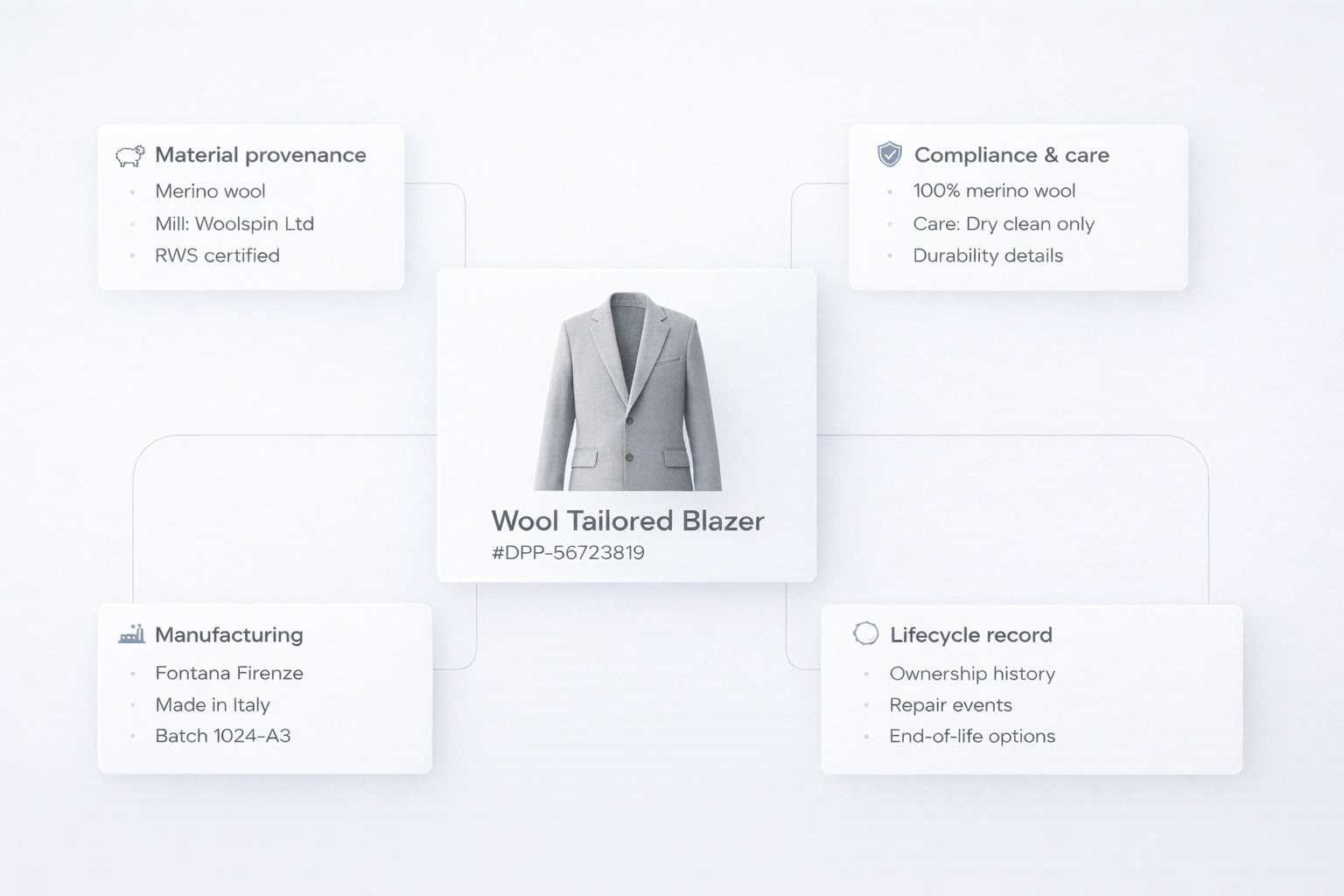
Manage the DPP Lifecycle.
From a single point.
The DPP consolidates essential product information—materials, origin, regulatory data, and instructions for repair or reuse—into a single digital record linked to the physical item.
It makes structured product data available to relevant stakeholders, supports compliance and traceability, and enables controlled access to branded content and engagement layers over time.
Who the DPP Applies to First
The EU plans a phased rollout by product category. Priority groups include both finished and intermediate products, with broader coverage over time.
Textiles and Footwear
Apparel and footwear are among the first product groups required to adopt DPP requirements.
Furniture and Design
Furniture and interior products are prioritized to support reuse, repair, and material recovery.
Tires and Mattresses
Durability and recycling requirements make these categories a priority for DPP programs.
Metals, Chemicals, Plastics
Intermediate materials (steel, aluminum, basic chemicals, plastics, glass, paper) are included in scope.
Key Benefits of the DPP
Regulatory Compliance
Aligns with the EU ESPR framework by structuring mandatory product data for verifiability and delegated acts between 2025 and 2030.
Authenticity and Traceability
Supports verified provenance and lifecycle tracking to reduce counterfeits and supply chain blind spots.
Consumer Transparency
Provides certified and trustworthy information to customers, supporting ESG goals and circular practices.
Circular Economy Enablement
Facilitates recovery, reuse, and recycling by making materials, components, and repair data accessible throughout the lifecycle.