

Digital Product Passport for Fashion: What Should It Really Contain?

With Digital Product Passports becoming a key component of upcoming sustainability and traceability requirements, many brands have already started exploring solutions. Yet one critical question remains unanswered: what should a Digital Product Passport actually include?
A QR code linked to a product page is not enough. A future-ready DPP should provide structured, accessible information that supports compliance, strengthens customer trust and enables new circular business models.
Let's explore the key elements that every fashion Digital Product Passport should contain.
A Product Passport Should Explain More Than What's On The Label
For decades, the fashion industry has relied on physical labels to communicate essential information. Material composition, country of origin and care instructions have all been condensed into labels that are often hidden or, even worse, ignored by customers. Digital Product Passports change that equation entirely: instead of asking what information should be removed to fit a label, brands can begin asking what information customers, regulators and future owners might actually need throughout a product's lifecycle.
Where were the materials sourced? Which facilities were involved in production? What certifications support sustainability claims? How should the product be repaired? Can its authenticity be verified years after purchase? These questions were difficult to answer through traditional labels, and Digital Product Passports make them accessible through a single digital experience. The result is a shift from product information to product intelligence.
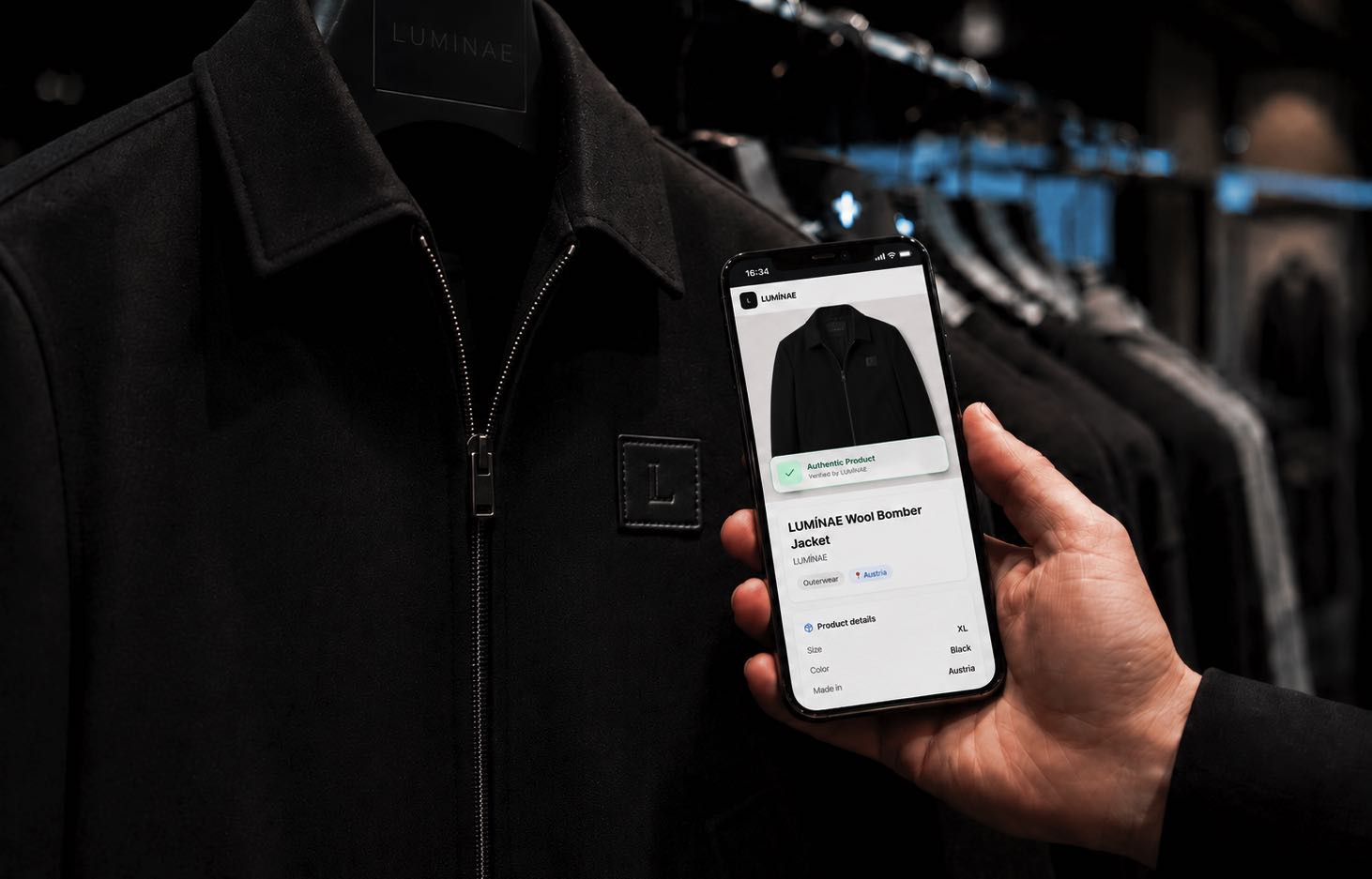
Transparency Is Moving Beyond Materials
Material composition has become one of the most visible aspects of sustainability communication. Consumers increasingly expect to know whether a garment contains organic cotton, recycled polyester or other preferred materials. However, the industry is quickly moving beyond simple material declarations. The real challenge is not just stating what a product contains, but providing credible information that explains where those materials originated, how they moved through the supply chain and what evidence supports the claims being made.
This is why the Digital Product Passport is designed to bridge that gap: rather than acting just as a marketing tool filled with generic sustainability statements, it should become a source of verifiable information such as certifications, production details and traceability data that can all contribute to building trust in a way that generic claims cannot. As regulations continue to evolve, the ability to demonstrate transparency will likely become just as important as transparency itself.
What Information Should A Fashion DPP Include?
As discussions around Digital Product Passports become more concrete, a clearer picture is emerging of the information future passports are likely to contain. While the final requirements are still being defined, recent European initiatives suggest that a compliant Digital Product Passport will need to go far beyond basic product information. The goal is not simply identifying a product, but providing enough context to understand where it came from, how it was made and how it should be managed throughout its lifecycle.
Product identification
A future-ready passport will start with product identification. Beyond the product name itself, brands will increasingly be expected to provide information such as product categories, model references and production batches. These identifiers create the foundation that allows every other piece of information to be linked and verified.
Materials and composition
Materials and composition will remain central, but the conversation is evolving beyond simple fibre percentages. Consumers, regulators and supply chain stakeholders are increasingly interested in understanding whether recycled materials were used, what type of recycling process was involved and whether any substances of concern are present within the product.
Traceability
Traceability is expected to play an equally important role. Future Digital Product Passports will likely include information about manufacturing locations, production facilities and other actors involved throughout the supply chain. Rather than providing a simple origin statement, brands may be expected to offer a more complete view of how a product reached the market.
Sustainability information
Sustainability information is also becoming more structured. Instead of relying on broad environmental claims, future passports are expected to include measurable indicators related to environmental performance, durability and recyclability. The goal is to create information that can be compared, verified and understood more consistently across the industry.
Lifecycle information
Finally, a Digital Product Passport should remain valuable after the point of sale. Care instructions, warranty information, repair guidance and end-of-life recommendations all help extend product lifespans and support more circular consumption models. In many cases, this information may become more useful years after purchase than on the day the product is first sold.
The Building Blocks Of A Fashion DPP
A future-ready Digital Product Passport is typically built around five types of information. Together, these building blocks create a digital record that supports transparency, compliance and long-term product value.
From product identity to post-purchase lifecycle support
Product Identity
Unique identifiers, categories, model references and production batches.
Materials & Composition
Fibre composition, recycled content and material specifications.
Supply Chain & Manufacturing
Production facilities, manufacturing locations and supply chain actors.
Sustainability Metrics
Environmental performance, durability and recyclability indicators.
Lifecycle Information
Care, repair, warranty and end-of-life guidance after purchase.
The Best Digital Product Passports Tell The Entire Story
Imagine purchasing a premium jacket today and scanning its Digital Product Passport five years from now. What should you find? Ideally, much more than the information that was available on the day of purchase. You should be able to understand the journey of the product, from raw materials to manufacturing. You should know how to care for it properly, where to access repair services and how to verify its authenticity if you decide to sell it.
Too often, Digital Product Passports are designed around the moment of production. In reality, their greatest value may emerge years later, when products are repaired, resold, authenticated or passed on to a new owner. A truly effective passport should support every stage of that journey.
The Missing Piece: What Happens After The Sale?
Much of the current discussion around Digital Product Passports focuses on manufacturing and compliance. Far less attention is being given to what happens after the product leaves the store, yet post-purchase interactions may ultimately become one of the most important dimensions of the entire system.
Fashion is increasingly moving toward circular business models. Resale platforms continue to grow. Consumers are becoming more interested in product longevity. Luxury and premium brands are searching for better ways to combat counterfeiting while maintaining stronger relationships with their customers. Digital Product Passports can play a role in all of these areas. By connecting each physical item to a unique digital identity, brands gain the ability to support authentication, ownership verification, repair programs and resale experiences. At the same time, consumers gain access to trusted information that remains attached to the product regardless of who owns it. In this context, the passport evolves from a compliance requirement into a long-term asset.
The most effective DPP implementations treat the post-purchase experience as a core feature — not an afterthought. With Authentica, brands can update passport content over time, verify authenticity on resale and turn every scan into a customer engagement moment. See it in action →
Building For The Future, Not Just For Compliance
One of the biggest mistakes brands can make is treating Digital Product Passports as a short-term regulatory project. Regulations will continue to evolve, data requirements will become more sophisticated, industry standards will mature and consumer expectations will increase. A passport designed only to satisfy today's requirements may need significant revisions tomorrow. Instead, brands should think of Digital Product Passports as the foundation of a long-term digital infrastructure.
The goal is clear: establishing a scalable digital identity capable of supporting transparency, traceability, authenticity and customer engagement for years to come. The brands that approach Digital Product Passports with this mindset are likely to gain advantages that extend far beyond compliance.
Is Your Brand Ready for a Future-Ready DPP?
Take our free assessment to understand which data fields, carriers and platform capabilities your fashion brand needs today — and what to plan for next.
Get Your Free Assessment →Looking Ahead
All in all, Digital Product Passports represent a massive opportunity for brands, and the most successful implementations will be those that recognise the broader opportunity beyond compliance alone. A well-designed Digital Product Passport should help explain where a product came from, how it was made, how it should be maintained and how its value can be preserved over time. It should create trust through transparency and remain useful long after the original purchase has taken place — still valuable once compliance becomes the norm.
Ready to Design Your Fashion DPP?
Book a demo with the Authentica team and see how a structured, future-ready Digital Product Passport looks in practice — from compliance data to post-purchase engagement.
Book a Demo