

From Physical Archive to Digital Access: AUTHENTICA's Pilot Project with the Cittadella degli Archivi in Milan

Inside the Cittadella degli Archivi, millions of documents preserve the administrative, urban and social memory of the city of Milan. With more than 200 linear kilometres of archival material, the facility is today one of the most advanced public archive infrastructures in Europe.
On 13 May, Professor Francesco Martelli, director of the Cittadella degli Archivi, inaugurated the new archival hub together with his department and the City of Milan, presenting a project aimed at rethinking how document collections of this scale can be managed, consulted and enhanced through automation, digitisation and new technologies. The mayor of Milan, Giuseppe Sala, was also present at the event.
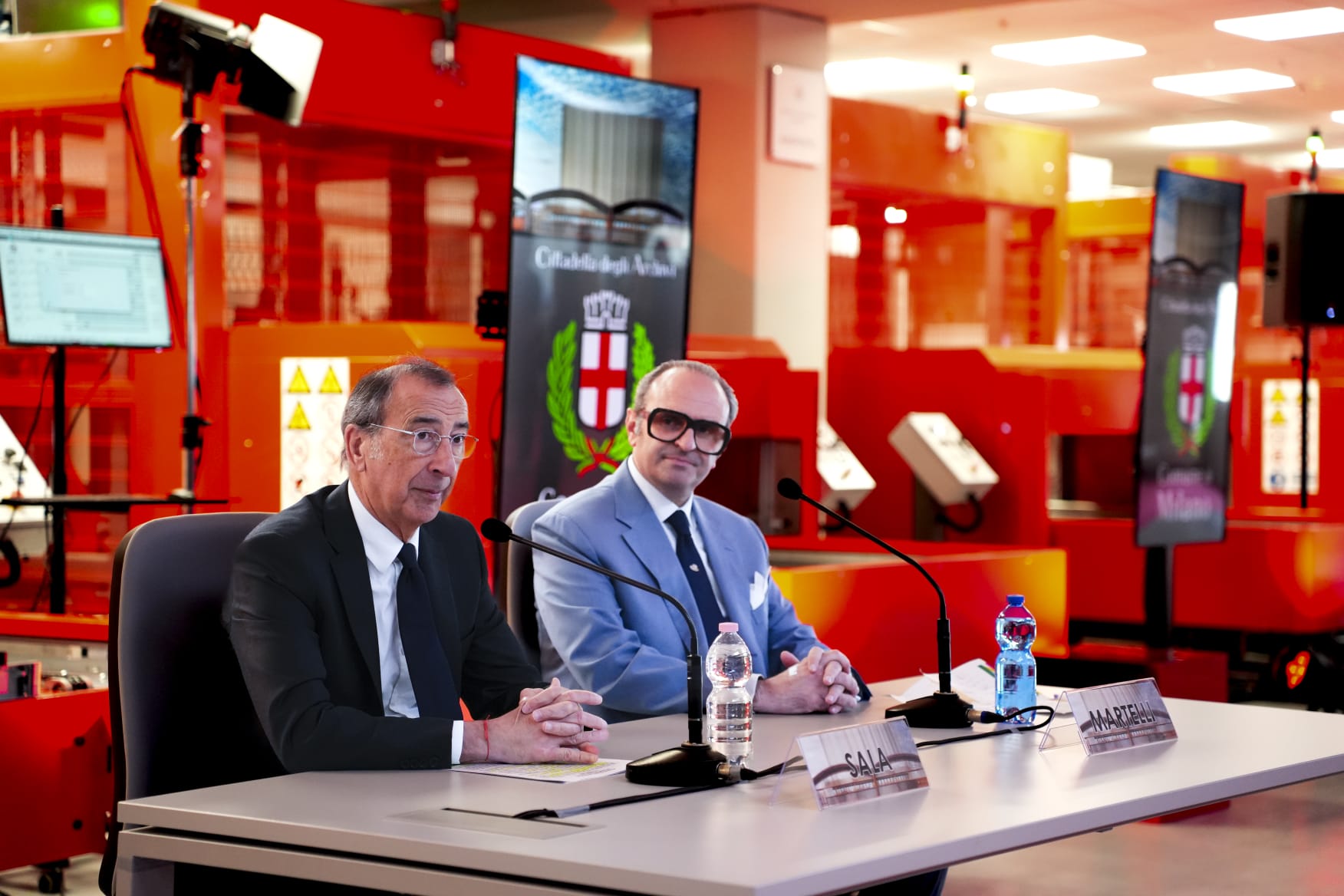
In this context, AUTHENTICA presented a pilot project developed together with the Cittadella degli Archivi: a system that links archive boxes to their respective contents through NFC technology.
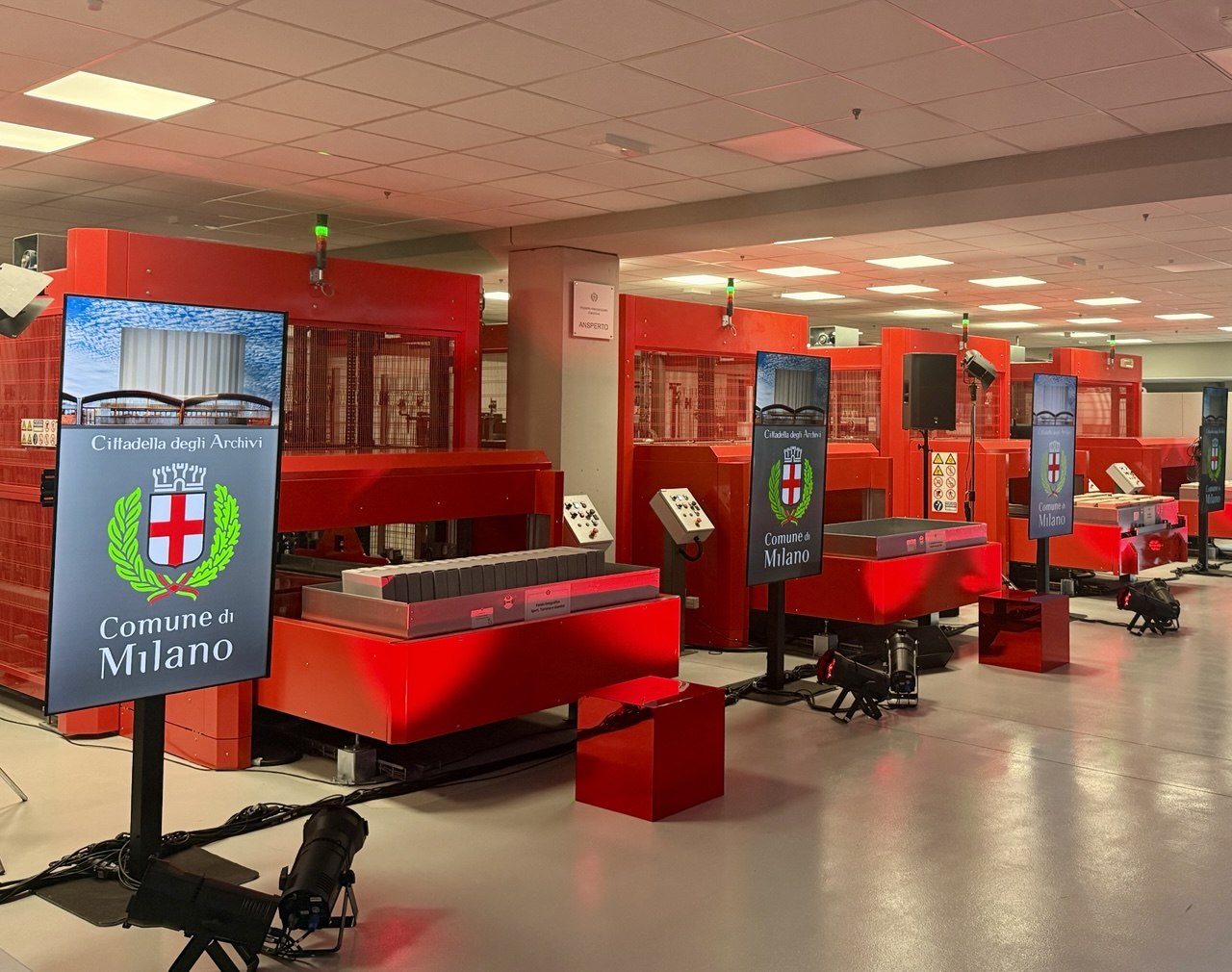
A digital infrastructure applied to physical heritage
Running a public archive of this size means coordinating, every day, a vast amount of physical material distributed inside a highly complex structure. Identifying boxes, consulting documents, locating items and managing operational flows still require time, manual handling and paper-based processes.
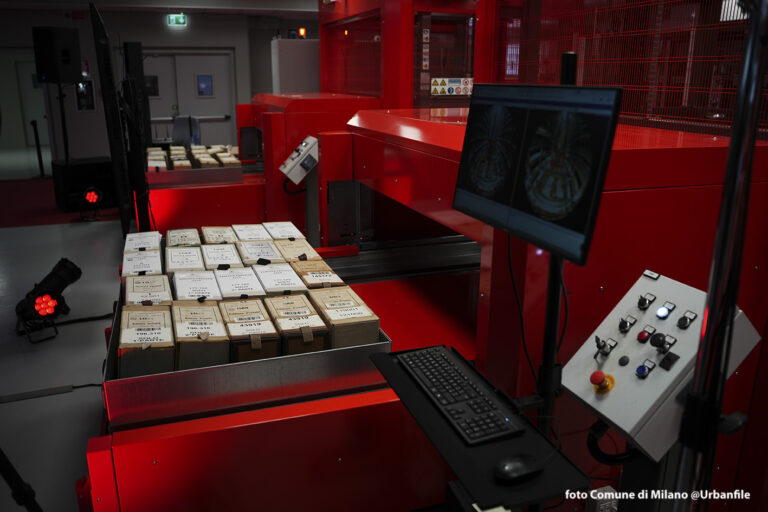
To support this process, AUTHENTICA developed a pilot project based on NFC chips physically applied to archive boxes and connected to a dedicated digital platform.
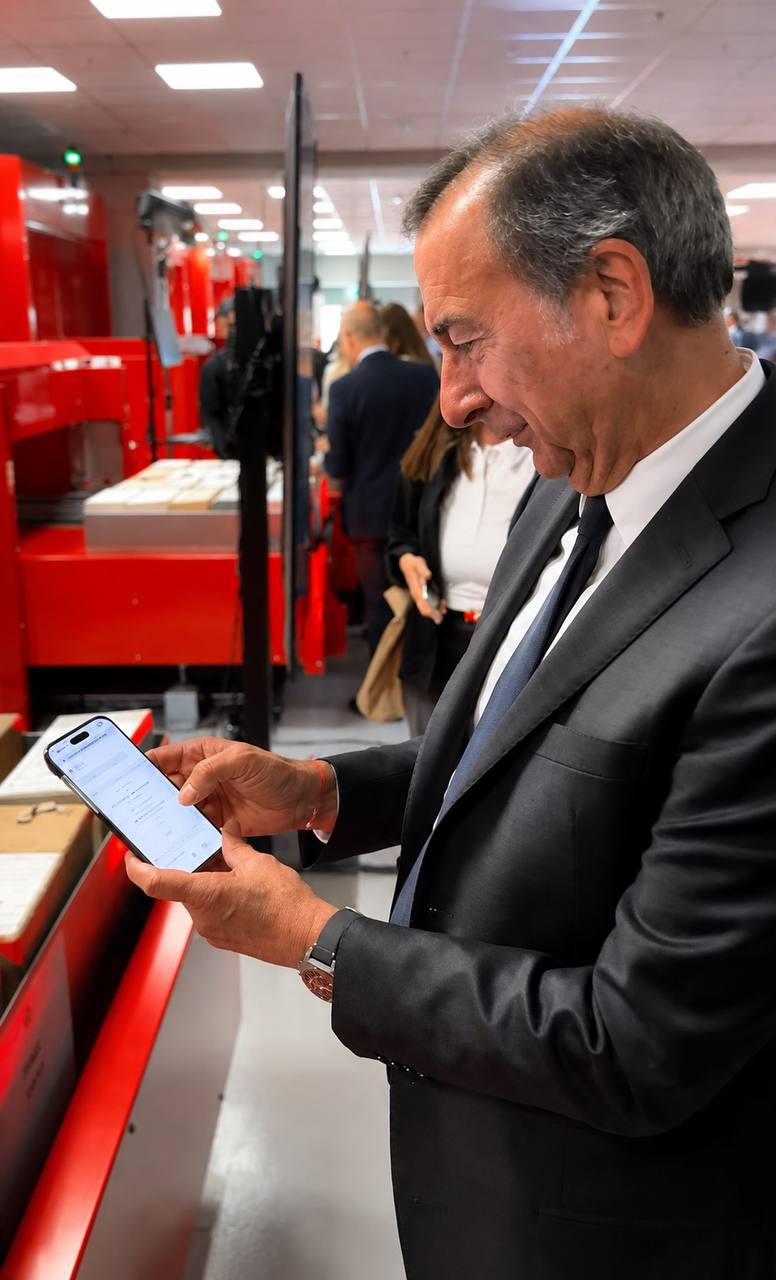
With a simple tap of a phone, operators and archivists can immediately access the documents and information associated with each box, without opening it physically and without having to consult separate registers.
The chips also make it possible to locate archive boxes inside the storage facility, simplifying the physical management of a document heritage on a very large scale. The goal is not to replace the paper document, but to give it a digital identity: an access point that connects the physical object to the information that describes it.
How the system works
Each NFC chip carries a unique identifier linked to a digital record of the box.
When an operator taps their phone on the chip, they are immediately taken to the related content: document index, metadata and other archival information. The interaction is instant and does not require dedicated apps or special procedures. The system works through any smartphone, making access to information simple and natural.
In practice, the archive box stops being just a physical container and becomes an access point to the content it holds.
The same mechanism that authenticates a handbag or a high-end garment — an NFC chip that ties a physical object to a verifiable digital identity — can also link an archive box to its content, its metadata and its physical location. The context changes, the infrastructure doesn't. Discover how it works →
Beyond document management: the experiential potential of archives
The most interesting aspect of this project goes beyond the day-to-day management of archives.
Immediate access to content through a smartphone also opens up new possibilities in cultural and public contexts, turning archival consultation into a more interactive and accessible experience. Exhibitions, public openings, cultural events and guided routes can integrate digital content accessible directly from the physical materials on display.
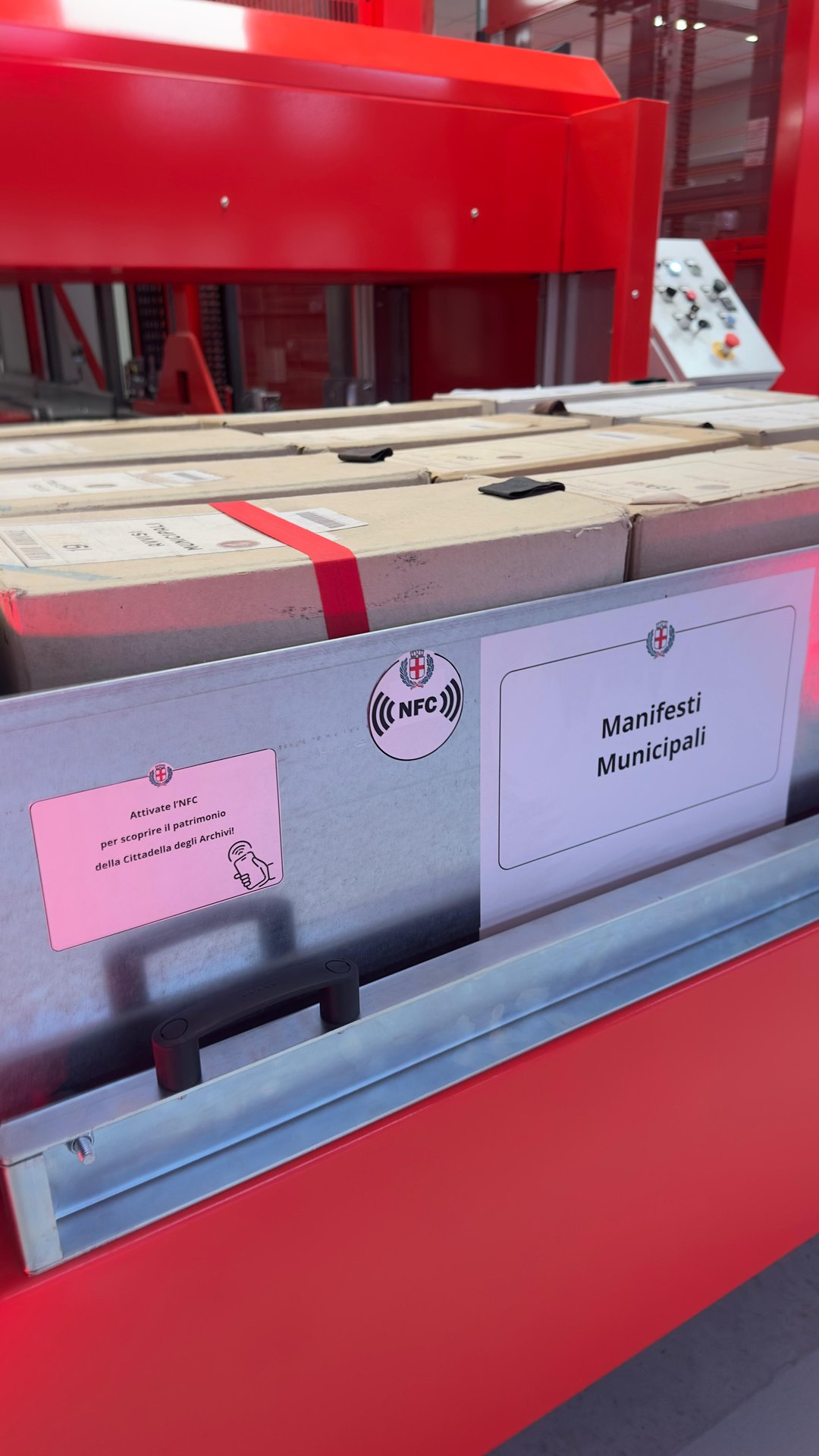
Documents, archive boxes and historical materials can become access points to multimedia content, in-depth resources, historical reconstructions and material available in real time. This is a particularly interesting direction for public archives, museums, institutional collections and any organisation working on the enhancement of historical and document heritage.
Why this case matters
The Cittadella degli Archivi sits far from the contexts in which this kind of technology is usually imagined. And yet the problem it solves is the same: connecting a physical object to the information that describes it, in a way that is immediate, reliable and simple to use.
The same infrastructure built by AUTHENTICA to connect physical elements and digital content can be adapted to entirely different contexts, from document management to cultural and institutional environments.
Public archives, museums, libraries, logistics and large document infrastructures often share the same need: turning physical objects into immediate access points to structured data and information.
In a setting like this, technology is not just there to identify an object: it creates an immediate connection between the physical archive and its digital content.
What you've just seen applied to the Cittadella degli Archivi is our Archives & Cultural Heritage solution: a single infrastructure for archives, museums, collections and exhibitions — identification, localisation and content access from a single tap. Explore the solution →
Do you run an archive, a collection, or a document infrastructure that needs to be connected to the digital layer?
Let's look at a concrete use case on your side — from identification and physical localisation to digital access to content.
Get your free assessment →FAQ
Do you need a dedicated app to use the system?
No. Content is accessed directly through a smartphone and an NFC interaction, with no dedicated app or special procedure required.
Do NFC chips replace the physical document?
No. The goal of the project is not to replace the paper archive, but to connect it to a digital system that makes content and information immediately accessible.
Is the system used only to consult documents?
Not only. The infrastructure also helps with identification, management, and physical localisation of archive boxes inside the storage facility.
Can this approach be applied outside the archive context?
Yes. The same kind of infrastructure can be adapted to museums, collections, exhibitions, logistics environments, and other contexts where physical items need to be linked to digital content and structured information.
Looking ahead
We are proud to have contributed to this project together with Professor Francesco Martelli and the Cittadella degli Archivi team.
Seeing a technology developed by AUTHENTICA applied directly to the historical memory of the city of Milan is a concrete example of how digital infrastructures and connected identities can open up new ways to manage, access and enhance public heritage.
Bring digital identity to your physical objects
Discover how AUTHENTICA helps archives, cultural institutions and brands turn every object into an access point to content, metadata and structured information.
Talk to us →